
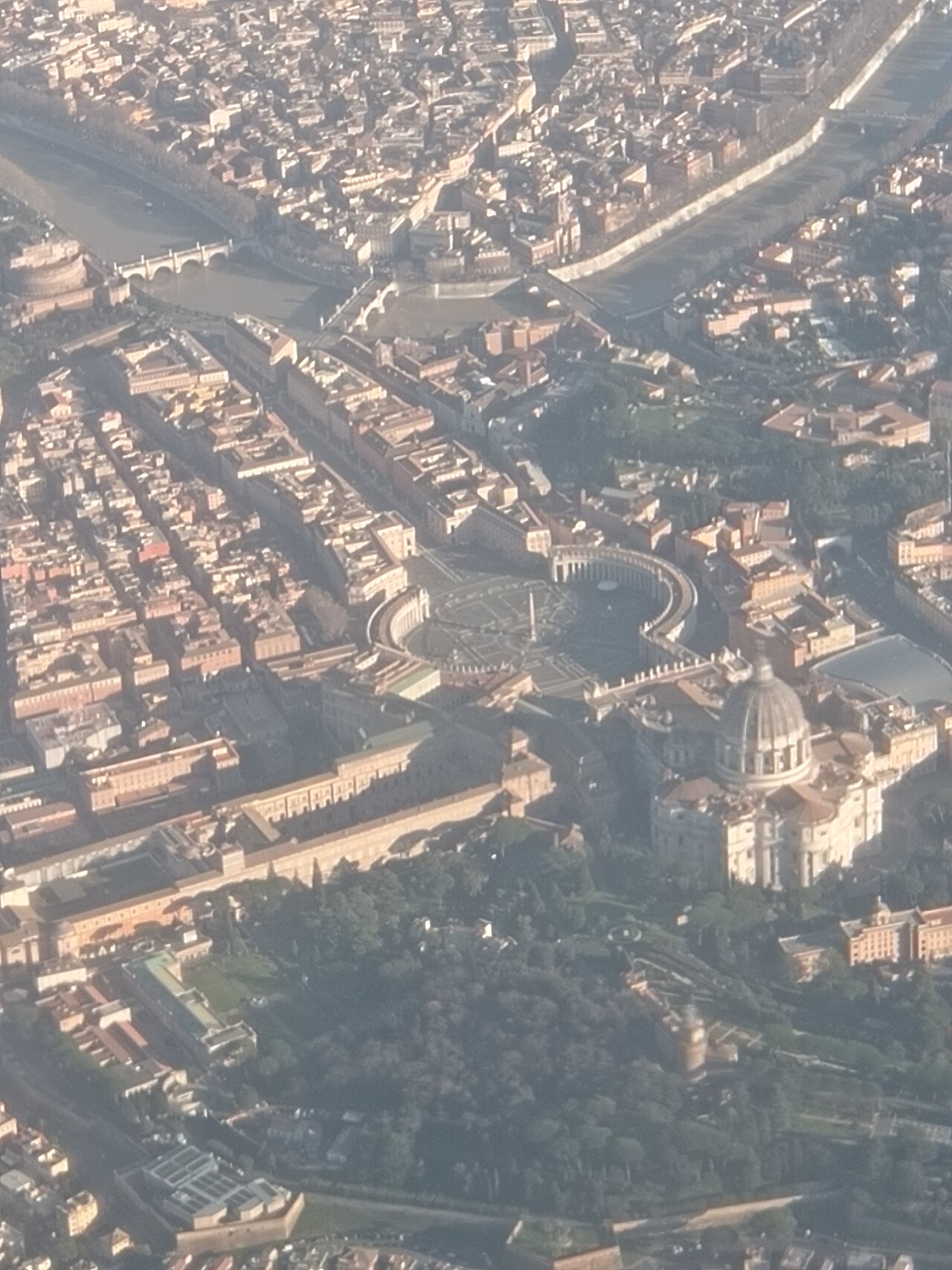
The smallest country in Europe is Vatican City, at just 0.49 km². Europe packs an unusual number of tiny states: four of the ten smallest countries in the world are here. Below is the ranking of the 10 smallest European countries by area, from the Vatican to Montenegro.
1. Vatican City (0.49 km²)
The smallest country in Europe and in the world. Around 800 residents, enclaved within Rome, ruled by the Pope. An elective theocracy with its own post office and the Swiss Guard for an army.
2. Monaco (2.02 km²)
A Mediterranean principality of roughly 36,000 people, ruled by the Grimaldi family since 1297. The most densely populated country on Earth, famous for its Formula 1 Grand Prix and the Monte-Carlo casino.
3. San Marino (61 km²)
Landlocked inside Italy, San Marino claims to be the world’s oldest surviving republic, founded in 301. About 34,000 inhabitants perched around Monte Titano.
4. Liechtenstein (160 km²)
A doubly landlocked Alpine principality between Switzerland and Austria, with around 39,000 people. Wealthy, German-speaking, and one of the world’s leading exporters of false teeth.
5. Malta (316 km²)
An archipelago south of Sicily and the smallest member state of the European Union. Around 540,000 people and a history running from the Knights of St John to British rule.
6. Andorra (468 km²)
A Pyrenean co-principality between France and Spain, jointly headed by the French president and the Bishop of Urgell. Roughly 80,000 residents, no airport, and a tourism-and-shopping economy.
7. Luxembourg (2,586 km²)
A landlocked grand duchy and one of the founding members of the European Union. Around 660,000 people, three official languages, and one of the highest GDP-per-capita figures in the world.
8. Cyprus (9,251 km²)
An eastern Mediterranean island, an EU member since 2004, divided since 1974 between the Republic of Cyprus and the self-declared north. About 1.2 million inhabitants.
9. Kosovo (10,887 km²)
Europe’s youngest country, having declared independence from Serbia in 2008. Around 1.8 million people; its statehood is recognised by many countries but not all.
10. Montenegro (13,812 km²)
A mountainous Adriatic country of roughly 620,000 people, independent from Serbia since 2006 and a candidate for European Union membership.
Smallest countries in Europe at a glance
| Rank | Country | Area (km²) | Population (approx.) |
|---|---|---|---|
| 1 | Vatican City | 0.49 | 800 |
| 2 | Monaco | 2.02 | 36,000 |
| 3 | San Marino | 61 | 34,000 |
| 4 | Liechtenstein | 160 | 39,000 |
| 5 | Malta | 316 | 540,000 |
| 6 | Andorra | 468 | 80,000 |
| 7 | Luxembourg | 2,586 | 660,000 |
| 8 | Cyprus | 9,251 | 1,200,000 |
| 9 | Kosovo | 10,887 | 1,800,000 |
| 10 | Montenegro | 13,812 | 620,000 |
Want the global picture? See the smallest countries in the world and the microstates of Europe for the six sovereign mini-states. The series also covers Asia, Africa, the Americas and Oceania.
Frequently asked questions
What is the smallest country in Europe?
Vatican City is the smallest country in Europe, at 0.49 km². It is also the smallest country in the world, enclaved within the city of Rome.
Is Monaco or the Vatican smaller?
The Vatican (0.49 km²) is smaller than Monaco (2.02 km²). Monaco is the second-smallest country in Europe and the most densely populated country in the world.
What is the smallest country in the European Union?
Malta is the smallest EU member state by area, at 316 km². The Vatican, Monaco, San Marino, Liechtenstein and Andorra are smaller but are not members of the European Union.
What are the European microstates?
The European microstates are the six smallest sovereign states of the continent: Vatican City, Monaco, San Marino, Liechtenstein, Andorra and Malta. They combine tiny territory with full independence.