
Jericho, in the West Bank, is the oldest city in the world still inhabited: traces of permanent occupation there go back about 11,000 years. Damascus, Aleppo and Byblos follow, all in the Near East. Here is the ranking, with the warning that always comes with it: nobody can date a city to the century.
1. Jericho, Palestine (around 9000 BC)
At Tell es-Sultan, archaeologists uncovered an 8-metre stone tower raised around 8000 BC, one of the oldest structures ever found. The city owes its longevity to a permanent spring in the Jordan Valley, 250 metres below sea level.
2. Damascus, Syria (around 8000 BC)
The Syrian capital contests first place with Jericho depending on how continuity of occupation is defined. Its old city, ringed by Roman walls, is still lived in, and its souk has operated on the same spot for more than two millennia.
3. Aleppo, Syria (around 6000 BC)
At the crossroads of the caravan routes between the Mediterranean and Mesopotamia, Aleppo was for centuries the wealthiest city in Syria. The civil war severely damaged its citadel and its covered souk, the largest in the world.
4. Byblos, Lebanon (around 5000 BC)
A Phoenician port that gave us the word “bible”, through the Greek byblos, the name for the papyrus traded there. The city preserves stacked layers of occupation: Neolithic, Phoenician, Roman, Crusader, Ottoman.
5. Erbil, Iraq (around 5000 BC)
Its citadel stands on a tell formed by the accumulated rubble of every earlier city, an artificial hill 32 metres high. It is one of the oldest documented sites of continuous habitation.
6. Susa, Iran (around 4200 BC)
Capital of the Elamite empire and later a residence of the Persian kings, Susa appears in the Bible and in Mesopotamian tablets. The modern town of Shush stands on the same ground today.
7. Sidon, Lebanon (around 4000 BC)
The other great Phoenician city alongside Byblos and Tyre. Sidon lived on glass and on purple dye, drawn from a sea snail, which coloured the cloaks of Roman emperors.
8. Plovdiv, Bulgaria (around 4000 BC)
The oldest inhabited city in Europe. Older than Rome and Athens, it was Thracian, then Macedonian under Philip II, father of Alexander the Great, and keeps a Roman theatre still used for concerts.
9. Varanasi, India (around 1800 BC)
A holy city of Hinduism on the banks of the Ganges. Pilgrims have come for more than three millennia to the same ghats, the steps leading down to the river.
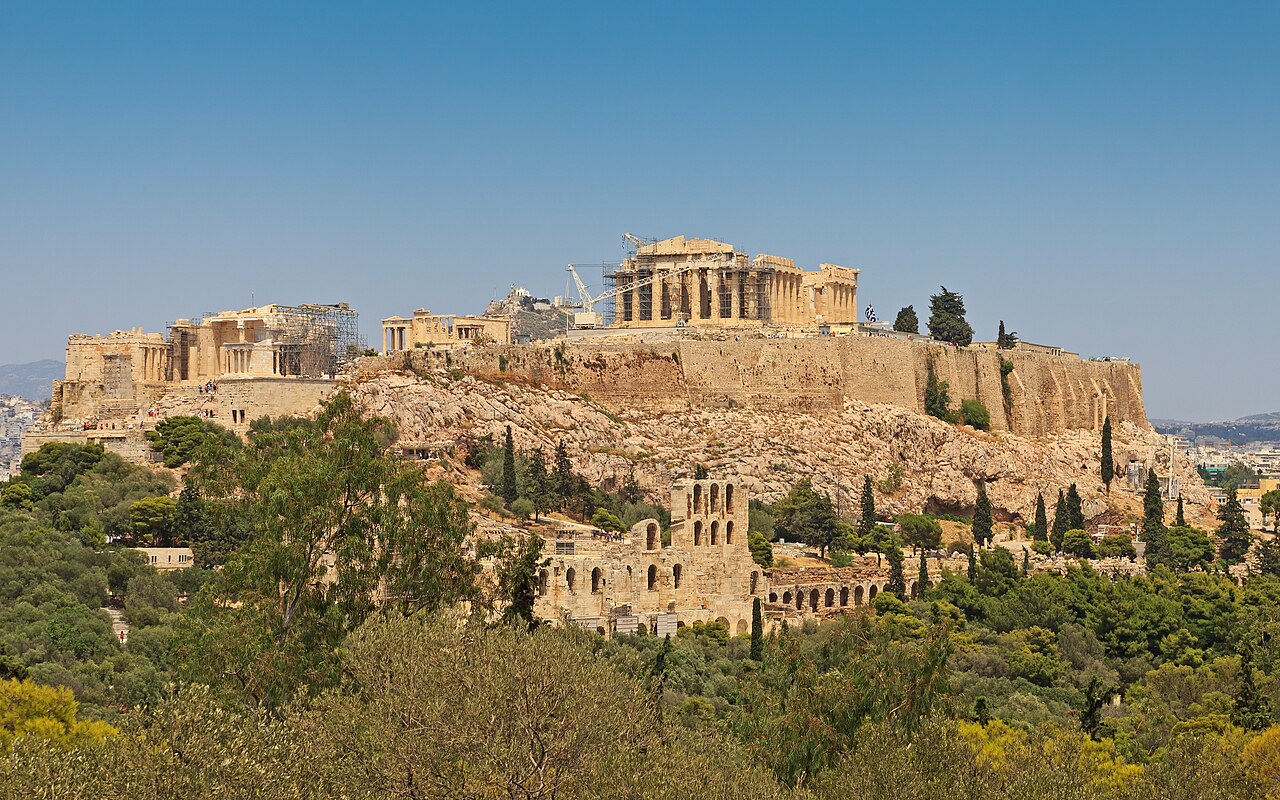
10. Athens, Greece (around 1400 BC)
Inhabited without interruption since the late Neolithic, Athens is the youngest on this list and yet the oldest of the great European capitals still in office.
The oldest cities at a glance
| Rank | City | Country | Occupied since |
|---|---|---|---|
| 1 | Jericho | Palestine | ~9000 BC |
| 2 | Damascus | Syria | ~8000 BC |
| 3 | Aleppo | Syria | ~6000 BC |
| 4 | Byblos | Lebanon | ~5000 BC |
| 5 | Erbil | Iraq | ~5000 BC |
| 6 | Susa | Iran | ~4200 BC |
| 7 | Sidon | Lebanon | ~4000 BC |
| 8 | Plovdiv | Bulgaria | ~4000 BC |
| 9 | Varanasi | India | ~1800 BC |
| 10 | Athens | Greece | ~1400 BC |
Nine of the ten sit in the Near East or on its edges. That is no accident: this is the Fertile Crescent, where farming was born and, with it, settled life.
Why the dates never agree
Three reasons explain why two serious lists give different orders.
“Inhabited” does not mean the same thing to everyone. Some require permanent occupation with no break at all, others accept abandonments lasting centuries. Jericho and Damascus swap places depending on the criterion.
The layers destroy one another. Each new city is built on the ruins of the last. Digging to the oldest level means cutting through everything that came after, which is impossible beneath an inhabited neighbourhood.
Dating carries a margin. Radiocarbon gives ranges of several centuries for these periods. A “9000 BC” is a central estimate, not a date.
To keep going: the lost cities of the world tell the opposite story, of those that did not survive; ancient monuments and the largest empires in history place these cities in their political context.
Frequently asked questions
Which is the oldest city in the world?
Jericho, in the West Bank, with traces of permanent occupation going back about 11,000 years. Damascus contests the title depending on how continuity of settlement is defined.
Which is the oldest city in Europe?
Plovdiv, in Bulgaria, inhabited for around 6,000 years. It predates both Rome and Athens, and keeps a Roman theatre that still hosts performances.
Which is the oldest capital still in office?
Damascus, capital of Syria, inhabited for around 10,000 years and a capital since the Umayyad period in the 7th century. Athens is the oldest of the European capitals.
Why are the oldest cities in the Near East?
Because that is where farming began, in the Fertile Crescent, around 10000 BC. Growing crops forces you to stay in one place, and staying in one place produces the first cities.
Is Rome not one of the oldest cities?
Rome is recent on this scale: its founding is placed around 753 BC, more than eight thousand years after the first houses of Jericho. It remains one of the oldest great capitals still inhabited.